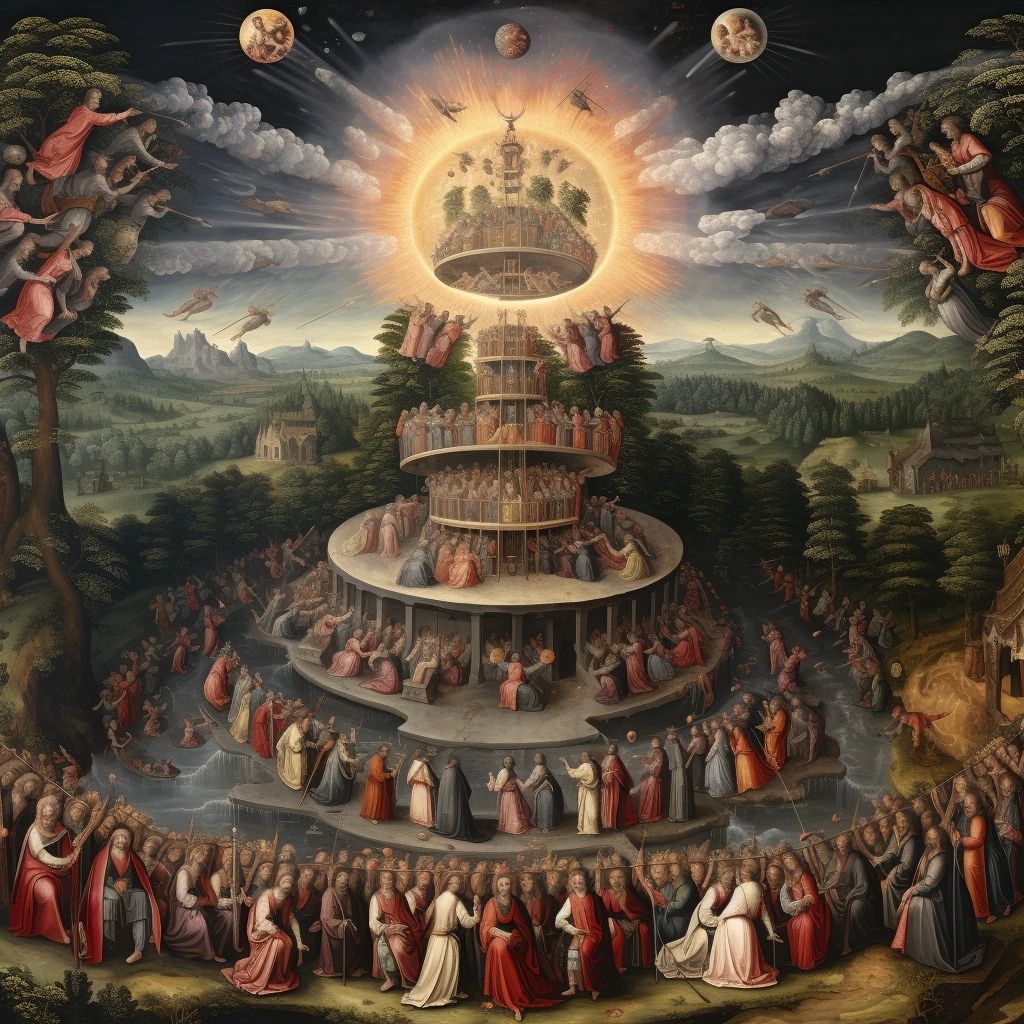
The Fall of Sophia

The Fall of Sophia

Introduction to Gnostic Cosmology Gnosticism emphasizes gnosis, or direct knowledge of the divine. The tradition features a dualistic worldview separating the spiritual realm (pleroma) from the material world, viewed as flawed creation. A supreme, unknowable God emanates a series of divine beings or aspects. The Role of Sophia in Gnostic Mythology Sophia, meaning “wisdom” in Greek, represents a significant aeon or divine emanation. She embodies a dual nature, both divine wisdom and personified folly. This duality proves essential to understanding her narrative and the material world’s origins. ...


February 7, 2024 · 2 min · The Satori Stream
Nag Hammadi Library

Gnosticism Today and the Discovery of the Nag Hammadi Library

Introduction Gnosticism maintains its influence on contemporary spiritual and religious thought despite its ancient origins. The 1945 discovery of the Nag Hammadi library significantly revitalized scholarly and popular interest in Gnostic beliefs, reshaping modern spiritual movements and academic research. Gnosticism in the Modern World Contemporary society increasingly attracts those seeking alternatives to institutional religion. Modern spiritual practitioners find appeal in Gnosticism’s emphasis on personal spiritual experience over dogma, valuing direct encounters with the divine. ...

February 7, 2024 · 2 min · The Satori Stream
What is Gnosticism?

What is Gnosticism?

Gnosticism is a multifaceted religious and philosophical movement from the early Christian era, with possible roots extending into pre-Christian times. It centers on gnosis, or spiritual knowledge, as the pathway to salvation through direct divine experience rather than faith alone or institutional doctrine. General Beliefs of Gnosticism The core conviction underlying Gnostic thought emphasizes that spiritual knowledge (gnosis) rather than faith alone or adherence to dogma is the key to salvation. ...

February 7, 2024 · 2 min · The Satori Stream
Who were the Gnostics?

Who were the Gnostics?

Gnosticism, particularly its early Christian form, represents a complex and fascinating aspect of early Christian history. It was characterized by distinctive beliefs, practices, and eventual suppression. Emerging in the first and second centuries AD, Christian Gnosticism was not a uniform movement but rather a constellation of diverse groups who shared certain esoteric and mystical beliefs. Origins The origins of Christian Gnosticism remain mysterious, likely drawing from Jewish, Christian, and Hellenistic pagan traditions. The movement developed as early followers of Jesus sought to understand his teachings and divine nature. ...

February 6, 2024 · 2 min · The Satori Stream

Stay Connected

Subscribe for updates on spirituality, technology, and the journey within.