Cover art for Why Is There Suffering?: rippling concentric circles radiating from a point of golden light on a deep blue gradient

Why Is There Suffering? The Gnostic Answer

If God is good and all-powerful, why is there suffering? This question has tortured thinkers for millennia. Every religion offers some answer. The most common in Western tradition: suffering is punishment for sin, or a test of faith, or a mystery beyond human understanding. We’re meant to trust that a loving God has reasons we can’t comprehend. Many find these answers unsatisfying. The ancient Gnostics offered a radically different response. They didn’t try to explain how a good God could create a world with so much pain. They said: the highest God didn’t create this world at all. ...


January 31, 2026 · 8 min · Jeremy Matthews
Cover art for You Are the Perfect Day: rippling concentric circles radiating from a point of golden light on a deep blue gradient

You Are the Perfect Day: Finding Rest That Actually Works

You’ve taken the day off. You’ve silenced notifications. You’ve told everyone you’re unavailable. So why do you still feel exhausted? Most of us have discovered an uncomfortable truth: physical rest doesn’t automatically produce inner rest. You can lie on a beach and still have your mind churning through tomorrow’s problems. You can sleep for ten hours and wake up with your jaw clenched. The ancient Gnostic teachers understood this paradox. And they discovered something that might change how you think about rest entirely. ...

January 31, 2026 · 8 min · Jeremy Matthews
Ancient papyrus scrolls covered in script lying in a dimly lit rock cave

Gnosticism Today and the Discovery of the Nag Hammadi Library

Introduction Gnosticism maintains its influence on contemporary spiritual and religious thought despite its ancient origins. The 1945 discovery of the Nag Hammadi library significantly revitalized scholarly and popular interest in Gnostic beliefs, reshaping modern spiritual movements and academic research. Gnosticism in the Modern World Contemporary society increasingly attracts those seeking alternatives to institutional religion. Modern spiritual practitioners find appeal in Gnosticism’s emphasis on personal spiritual experience over dogma, valuing direct encounters with the divine. ...

February 7, 2024 · 2 min · Jeremy Matthews
A lone figure stands at a lake shore beneath a luminous ringed orb of light parting storm clouds over mountains

What is Gnosticism?

Gnosticism is a multifaceted religious and philosophical movement from the early Christian era, with possible roots extending into pre-Christian times. It centers on gnosis, or spiritual knowledge, as the pathway to salvation through direct divine experience rather than faith alone or institutional doctrine. General Beliefs of Gnosticism The core conviction underlying Gnostic thought is that spiritual knowledge (gnosis) is the key to salvation, ahead of faith alone or adherence to dogma. Gnostics embrace a dualistic worldview: the spiritual realm represents pure goodness, while the material world is flawed or corrupt. This framework posits a true, transcendent God against a lesser deity called the demiurge, who is responsible for creating the physical universe and sometimes identified with the Old Testament God. ...

February 7, 2024 · 2 min · Jeremy Matthews
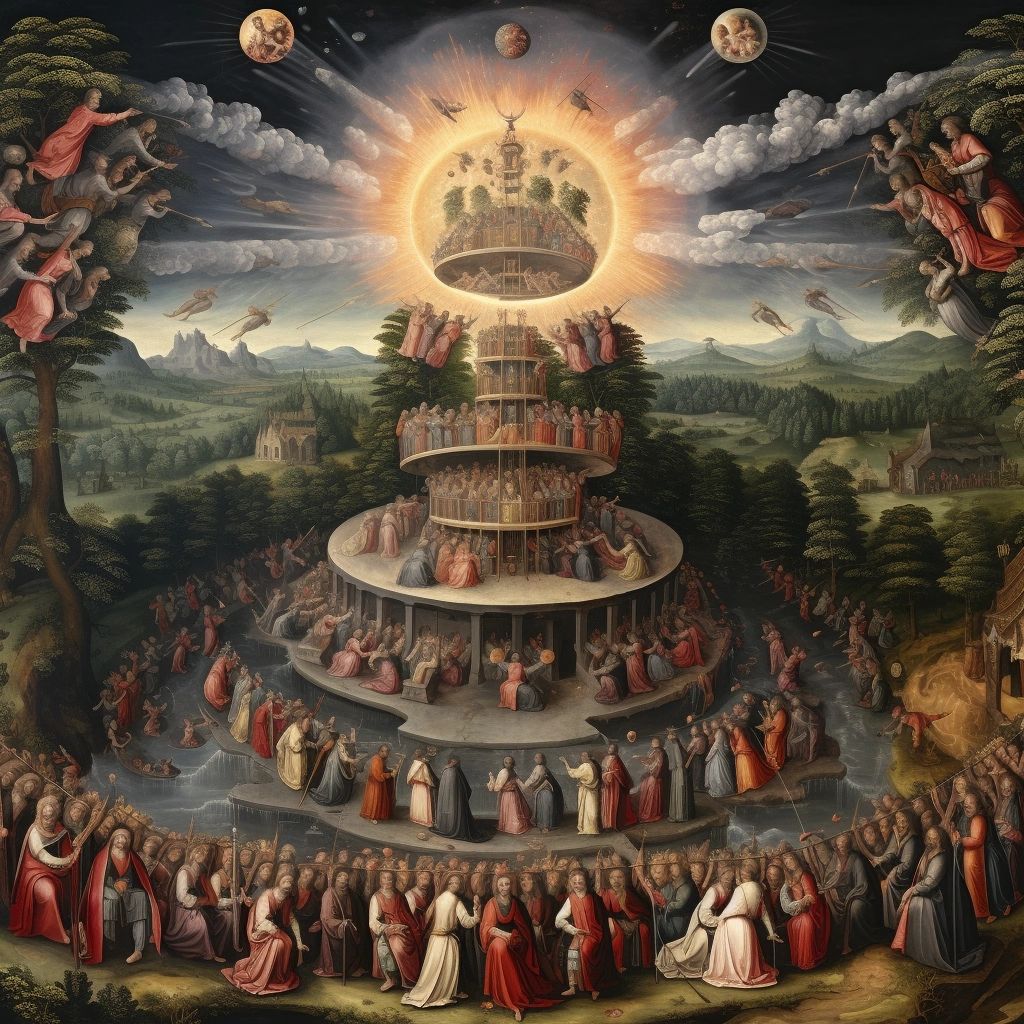
Renaissance-style painting of robed figures gathered in circles around a tiered tower beneath a radiant celestial sphere

Who were the Gnostics?

Gnosticism, particularly its early Christian form, represents a complex and fascinating aspect of early Christian history. It was characterized by distinctive beliefs, practices, and eventual suppression. Emerging in the first and second centuries AD, Christian Gnosticism was not a uniform movement but rather a constellation of diverse groups who shared certain esoteric and mystical beliefs. Origins The origins of Christian Gnosticism remain mysterious, likely drawing from Jewish, Christian, and Hellenistic pagan traditions. The movement developed as early followers of Jesus sought to understand his teachings and divine nature. ...

February 6, 2024 · 2 min · Jeremy Matthews