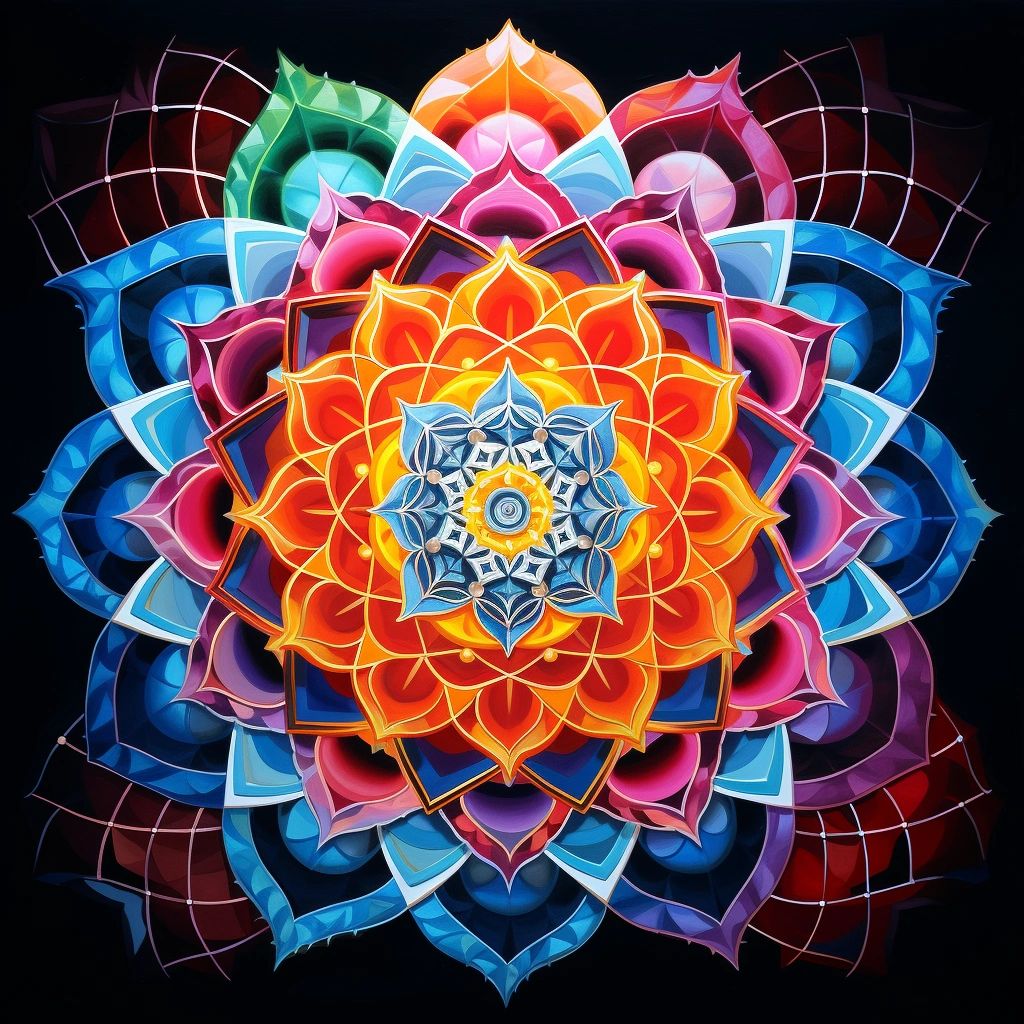
Symmetrical mandala of layered lotus petals in bright rainbow colors on a black background

The Chakras

Chakras, derived from Sanskrit meaning “wheel” or “circle,” represent conceptual focal points within the human body used in ancient Eastern traditions like Hinduism and Buddhism. These energy centers channel life force known as prana and influence our physical, mental, and spiritual well-being. History and Common Beliefs The chakra concept originates in ancient India, first appearing in the Vedas (circa 1500-500 BCE). While early texts mentioned only a few chakras, the system evolved to include seven primary chakras aligned along the spine from its base to the crown of the head. This framework became integral to yoga, meditation, and spiritual practices aimed at achieving balance and healing. ...
February 6, 2024 · 3 min · Jeremy Matthews
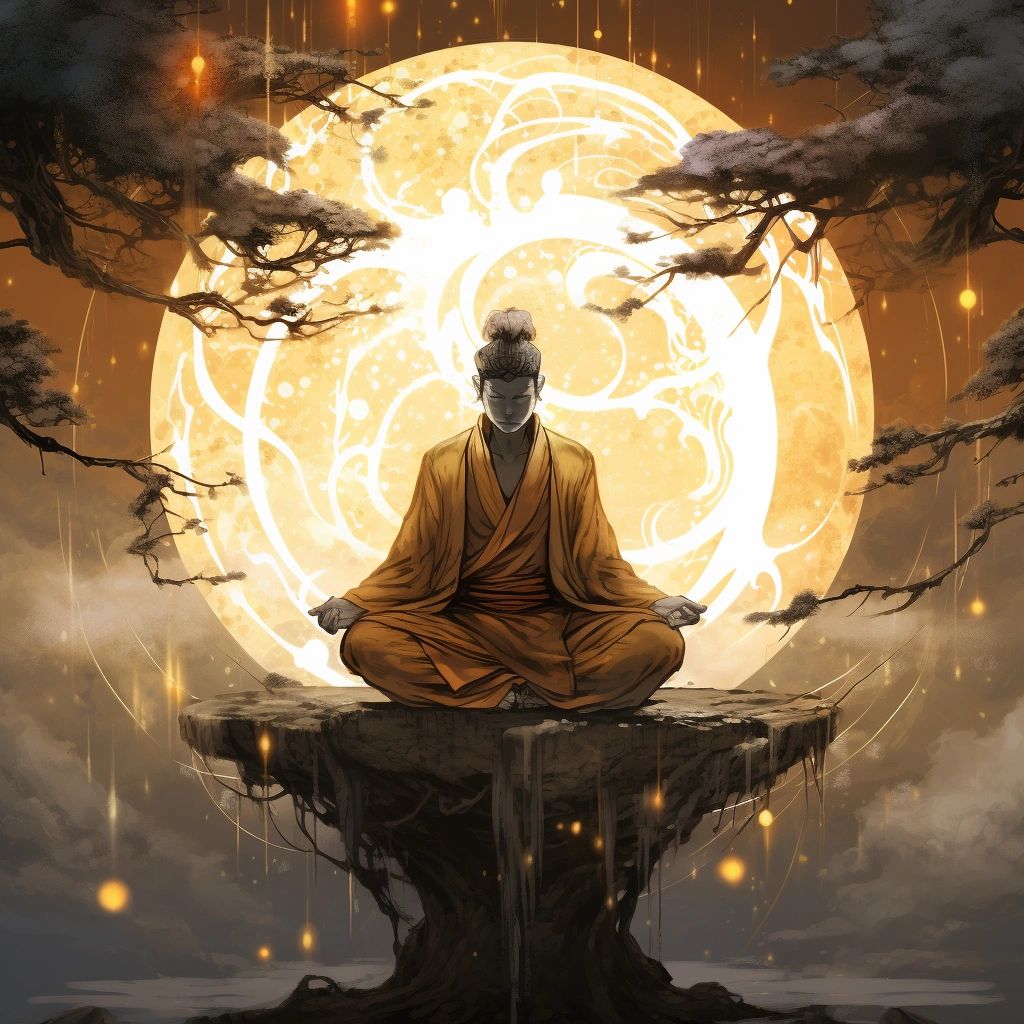
A monk in orange robes meditates on a rocky ledge before a giant glowing golden sphere with swirling patterns

What is Satori?

Introduction Satori represents a cornerstone concept in Zen Buddhism, referring to a sudden awakening or enlightenment. It is a flash of understanding that transcends intellectual grasp, distinguishing itself through its immediate nature rather than gradual spiritual development. The experience involves a direct, intuitive realization of the interconnectedness of all things and the emptiness of the self. This moment transcends logical comprehension, revealing reality stripped of ego and conventional categorization. The Path to Satori Zen practitioners pursue this awakening primarily through meditation, or zazen. The practice often incorporates koans, which are paradoxical statements or questions designed to exhaust rational thinking. These tools serve to dismantle the logical framework that confines our thinking, pushing practitioners beyond intellectual boundaries. ...

January 27, 2024 · 1 min · Jeremy Matthews