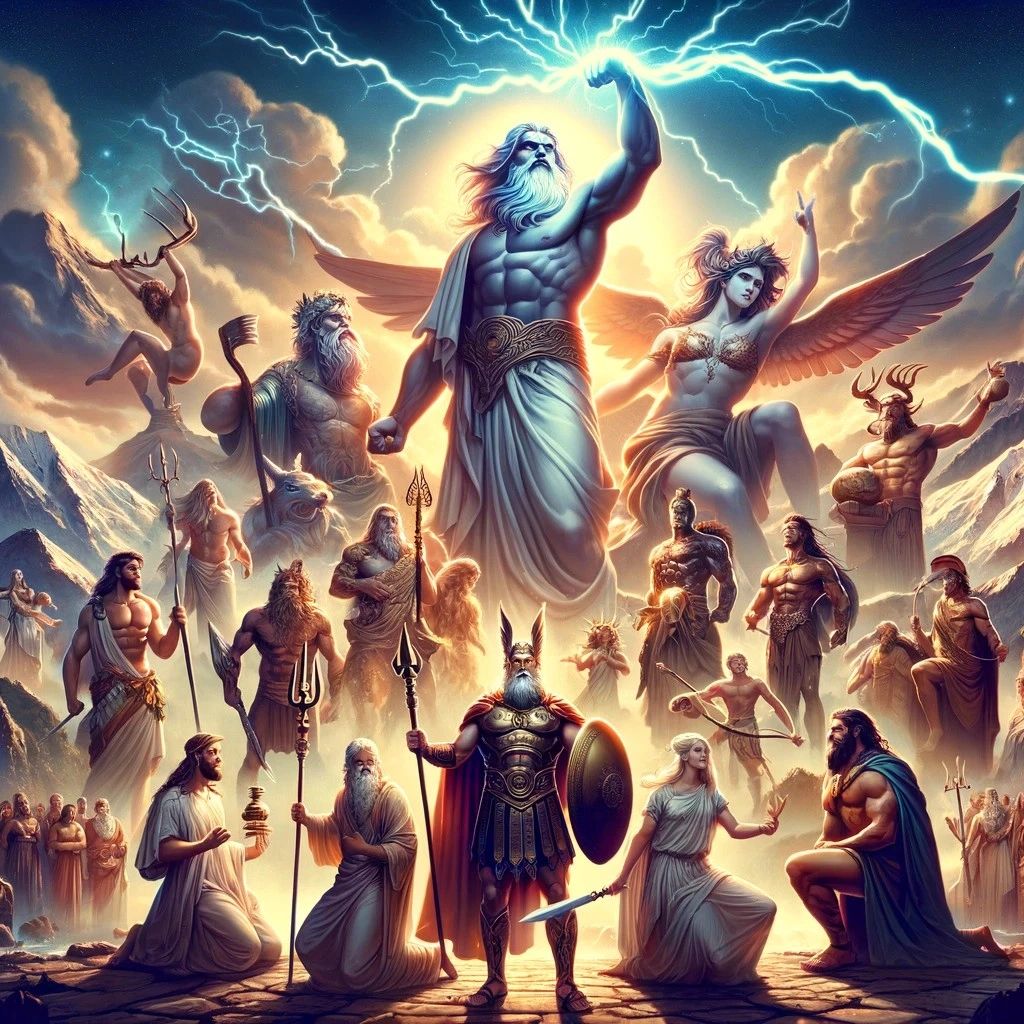
Greek mythology represents a rich tapestry woven from the threads of human imagination and the quest for understanding the world’s mysteries. This ancient system encompasses gods, goddesses, heroes, and monsters embodying natural forces and human characteristics.
The Major Pantheon
The primary deities resided on Mount Olympus, each governing specific domains:
- Zeus: King of gods; rules sky and thunder
- Hera: Queen of gods; goddess of marriage and childbirth
- Poseidon: God of the sea, earthquakes, and horses
- Demeter: Goddess of agriculture, harvest, and fertility
- Athena: Goddess of wisdom, warfare, and crafts
- Apollo: God of sun, music, healing, and prophecy
- Artemis: Goddess of hunt, wilderness, and childbirth
- Ares: God of war’s brutal aspects
- Aphrodite: Goddess of love, beauty, and desire
- Hephaestus: God of fire and metalworking
- Hermes: Messenger god; guide to the Underworld
- Hestia: Goddess of hearth, home, and family
History and Creation Myth
The myths evolved over centuries, influenced by Minoan and Mycenaean civilizations. Homer’s Iliad and Odyssey, along with Hesiod’s Theogony (circa 8th century BCE), codified oral traditions into literary form.
The creation narrative begins with Chaos, from which Gaia (Earth) and Uranus (Sky) emerged. The Titans ruled until Zeus led a rebellion, establishing Olympian dominance after the Titanomachy.
Interesting Facts
- Greeks developed myths explaining natural phenomena and human behavior
- Many myths carried moral warnings about hubris and its consequences
- Ancient Olympic Games honored Zeus, reflecting gods’ importance in daily life
Greek Views on Mythology and Divine Role
The ancient Greeks integrated mythology with religion and everyday existence. Gods were feared and respected as powerful beings capable of influencing human affairs. Temples, festivals, and sacrifices honored them throughout Greece.
Myths served educational purposes, explaining natural phenomena, teaching morality, and establishing social norms. Greek culture viewed the gods as anthropomorphic reflections of human nature, flawed yet divine, helping people comprehend their universe and themselves.