The Gnostic myth is crowded with unfamiliar names, and it needs only one of them to break your heart. Her name is Sophia, which is simply the Greek word for wisdom, the same word hiding inside philosophy, the love of her. Whole libraries chase what that love means. The Gnostics did something different and told her story.
This site has followed that story through three separate posts, one for each act. What has been missing is the whole arc in one place, and a look at what changes when all three acts belong to one character. Here it is, the map of Sophia from first light to homecoming.
Wisdom Had a Job Before the Myth
Sophia was not invented by heretics. Centuries before the Gnostics, Jewish wisdom literature had already personified her, and in the book of Proverbs she speaks in the first person about being present at creation:
“Then I was constantly at his side. I was filled with delight day after day, rejoicing always in his presence, rejoicing in his whole world and delighting in mankind.”
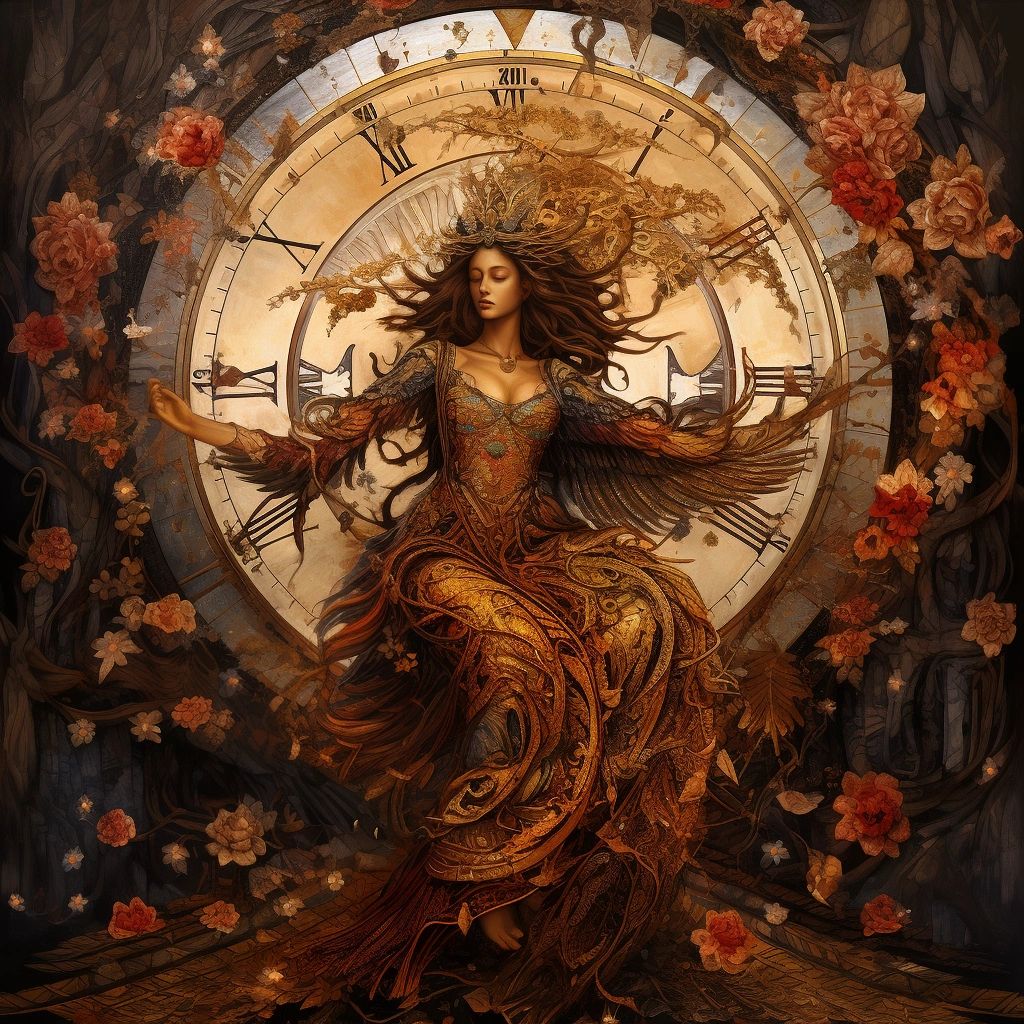
Her mood is the detail worth keeping. The oldest portrait of Wisdom is joy at the elbow of the Creator, delight moving over a new world. The figure never left the mainstream either, since the grandest church of the ancient world, Hagia Sophia in Constantinople, bears her name, Holy Wisdom, to this day.
The Gnostic storytellers inherited this radiant figure, and their dark addition was a question the older portrait never asked. What would it take for a being like that to fall, and what would the falling make?
The Reach
Their answer begins at the far edge of the Pleroma, the fullness of divine qualities where Sophia is the youngest light. Everything in that realm exists in pairs, and one Valentinian text states the rule plainly, that “no one in the Fullness shall be without a partner.” Completeness, in this cosmology, is never a solo condition.
Sophia’s mistake was to create alone. She reached toward the unknowable depths and brought forth from herself, and the same text describes her at the moment everything tips, “all by herself, without her partner.” What came of the solitary act could not stay in the fullness. It fell, and it became a maker, and the maker built the world we wake up in, ignorant of everything above him. The text pauses over her with surprising tenderness, adding that her suffering was never the Father’s will. The myth blames the loneliness of the act, and it never stops loving the actor.
The Grief
The second act belongs to grief, and the tradition gave it astonishing room. In the Pistis Sophia, a later and more elaborate telling, the fallen Wisdom is stranded in the darkness below, stripped of her light and mocked by the powers of the place, who take pleasure in her reduction. What she does there is the hinge of the whole tradition. She sings.
Thirteen times she turns back toward the light in songs of repentance, and the first twelve receive no visible answer. The text makes grief long on purpose. Anyone who has kept praying into a silence knows the acoustics of those chapters, and the tradition seems to have written them precisely for such readers.
The Rise
The story refuses to end in the dark. The light hears, a rescuer descends, and Sophia is raised and restored, robed again in her own radiance, with even the powers that mocked her put in their place. The fullness takes back its youngest without reproach.
Her restoration carries the myth’s boldest promise. The fall was real, the exile was long, and none of it was final. What left the fullness came home to it, which means the distance between lost and found, in this cosmology, is always traversable.
One Arc, Two Addresses
Read quickly, the Sophia story is exotic cosmology, an account of why a world like ours exists at all. Read slowly, it is a biography with your name on it, and the tradition intended both readings at once.
The claim knitting them together is that the world is made of Wisdom’s crisis, and that the spark in every person is her light, still scattered, still finding its way back. Her arc therefore doubles as a map of the soul, and the map has five stations. The reach, the fall, the grief, the turn, the rise. Nobody lives outside the sequence, and most of us could name our current station without much reflection.
If you are at the reach, check the partner rule. The station’s danger is the solitary act, the creation attempted alone that wants a companion, a witness, a consent. Sophia’s whole catastrophe fits inside that one skipped step.
If you are in the grief, the repentances are your reading. Their lesson is that grief which keeps turning toward the light counts as movement even when nothing answers, and that twelve silences do not predict the thirteenth.
If you are rising, tell the story. Restoration in these texts is never private, since Sophia’s return repairs a whole cosmos. Somebody in your circle is on verse eleven and needs to hear how the ending goes.
Loving Her Back
Philosophy has claimed for twenty-five centuries to be the love of wisdom. The Gnostics read that ambition and raised it, insisting that wisdom is someone to be loved rather than something, a person with a history, wounds, and a homecoming.
Whether you take their myth as revelation or as psychology, the practice it teaches is the same. Find where Wisdom is fallen near you, in a person, in a situation, in yourself, and side with her rise. That is the whole plot, and according to the old storytellers, you are already in it.
The Valentinian lines on partnership are from A Valentinian Exposition in Marvin Meyer’s The Nag Hammadi Scriptures (HarperOne, 2010). Wisdom’s speech is Proverbs 8:30-31 (NIV). The Pistis Sophia material is summarized from the Askew Codex tradition and treated at length in the site’s Thirteen Repentances post.