Cover art for The Vision Peter Couldn't Accept: rippling concentric circles radiating from a point of golden light on a deep blue gradient

The Gospel of Mary: The Vision Peter Couldn't Accept

The Gospel of Mary starts on page 7, in the middle of a question. Someone is asking the risen Savior whether matter will be destroyed, and we never learn who, because the first six pages of the only Coptic copy are gone. Four more pages vanish right when Mary starts describing her vision. What survives is short enough to read over a cup of coffee. It’s also one of the most dramatic texts from early Christianity, and it ends with an argument that never really got settled. I wrote about who Mary Magdalene was in the Gnostic tradition back in January. This time I want to read the gospel itself, holes and all, because the argument at the end means more once you’ve seen what comes before it. ...
September 29, 2026 · 8 min · Jeremy Matthews
Cover art for The Silence and the Utterance: rippling concentric circles radiating from a point of golden light on a deep blue gradient

The Silence and the Utterance: The Feminine Divine in Gnostic Thought

At the very top of the Valentinian map of reality, before a single world or word exists, the divine is already a pair. The account preserved by Irenaeus names them Depth and Silence, the unfathomable source and his eternal partner, and the detail deserves a slow second look. In this cosmology the deepest layer of God has a feminine half, and her name is Silence. Everything that follows descends through her. The buried texts of Gnosticism are the largest surviving body of early Christian literature in which the feminine is load-bearing at every level of divinity, from the source’s own partner down to the voice of the most shocking poem in the library. We’ll take those levels in order, from the top down. ...

August 31, 2026 · 5 min · Jeremy Matthews
Cover art for The Wisdom Who Fell and Rose: rippling concentric circles radiating from a point of golden light on a deep blue gradient

Sophia: The Wisdom Who Fell and Rose

The Gnostic myth is crowded with unfamiliar names, and it needs only one of them to break your heart. Her name is Sophia, which is simply the Greek word for wisdom, the same word hiding inside philosophy, the love of her. Whole libraries chase what that love means. The Gnostics did something different and told her story. This site has followed that story through three separate posts, one for each act. What has been missing is the whole arc in one place, and a look at what changes when all three acts belong to one character. Here it is, the map of Sophia from first light to homecoming. ...

August 19, 2026 · 5 min · Jeremy Matthews
Cover art for Mary Magdalene: rippling concentric circles radiating from a point of golden light on a deep blue gradient

Mary Magdalene: The Exemplary Disciple

You probably learned that Mary Magdalene was a prostitute whom Jesus forgave. She’s the repentant sinner who washed his feet with tears and dried them with her hair. There’s just one problem: that’s not what the texts say. The Bible never identifies Mary Magdalene as a prostitute. That association came later, in a 6th-century sermon by Pope Gregory the Great, who conflated several different women in the Gospels into a single figure. ...

January 31, 2026 · 7 min · Jeremy Matthews
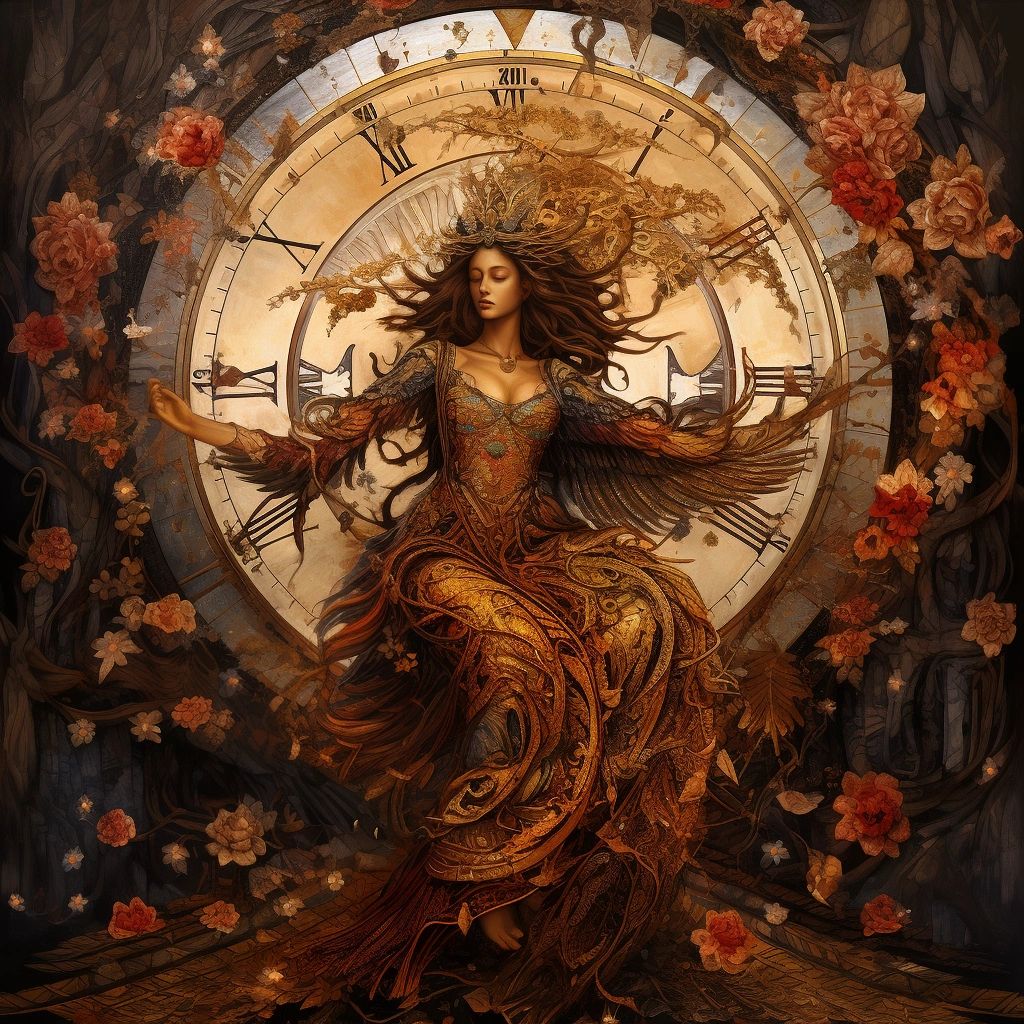
Ornate painting of Sophia as a woman in golden robes falling against a great clock face surrounded by roses

The Fall of Sophia: When Wisdom Made a Mistake

Before there was a world, there was a mistake. It was a divine one, made by Wisdom herself. The ancient Gnostics told a story that explains why the world contains both beauty and suffering, why we feel homesick for a place we’ve never been, and why the path to awakening is also the path of return. It’s the story of Sophia. And it might be your story too. The Fullness Before the Fall In the beginning, according to Gnostic teaching, there was the ineffable One. Beyond description, beyond conception, beyond any name we could give. ...

January 31, 2026 · 7 min · Jeremy Matthews
Cover art for The Restoration: rippling concentric circles radiating from a point of golden light on a deep blue gradient

The Restoration: How Sophia Returns to the Fullness

This is the third and final post in a series on Sophia. The first covered The Fall of Sophia, and the second explored The Thirteen Repentances. The story has moved from tragedy toward hope. Sophia fell through her solitary act of creation. She suffered in the chaos below, her light stolen, her dignity mocked. She offered thirteen repentances, turning persistently toward the light despite her darkness. Now comes the resolution: Sophia’s restoration to the Pleroma, the divine Fullness from which she fell. This ancient mythology holds a promise. ...

January 31, 2026 · 7 min · Jeremy Matthews
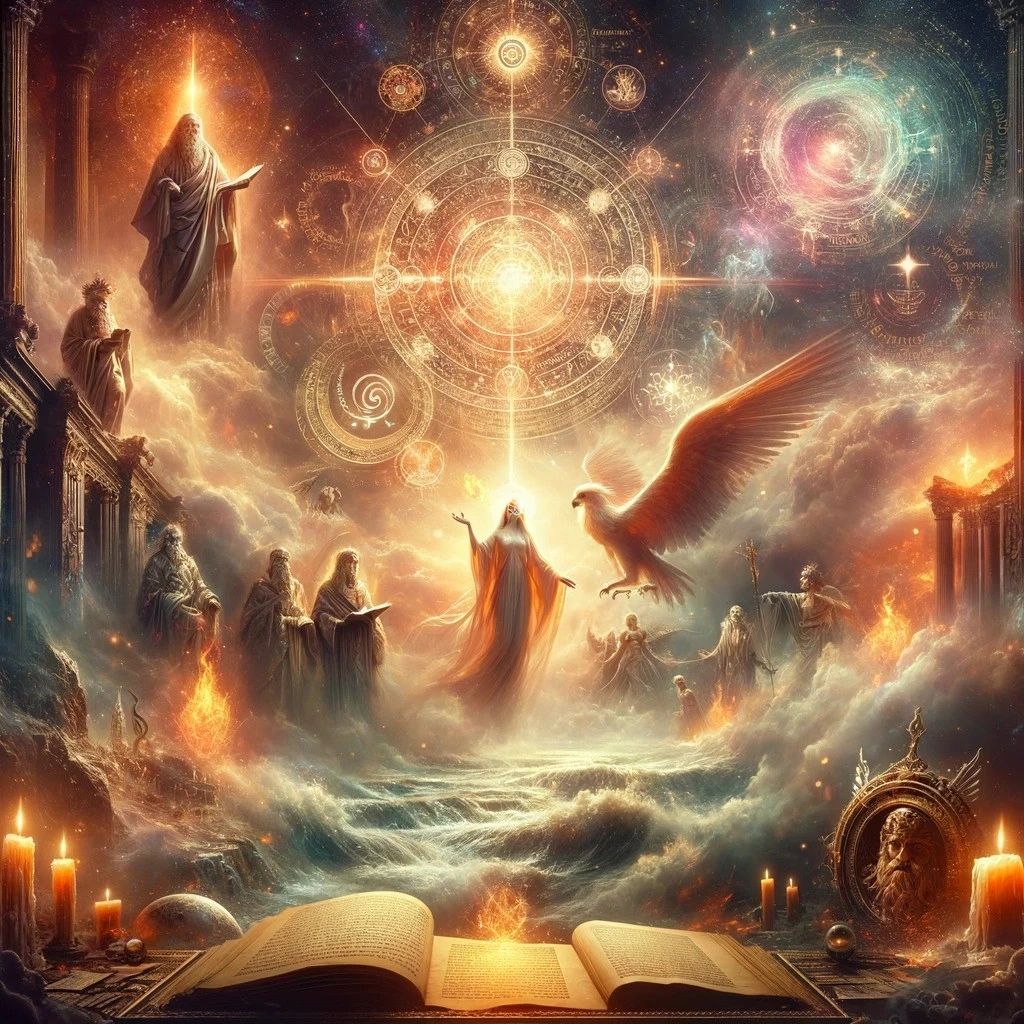
Golden-toned mystical painting of robed figures and a phoenix beneath glowing sacred geometry and a galaxy

Thunder, Perfect Mind: The Voice That Shatters Categories

In 1945, farmers digging near the Egyptian town of Nag Hammadi unearthed a sealed earthenware jar containing ancient manuscripts. Among them was one of the strangest and most powerful texts in all of religious literature. It’s called Thunder, Perfect Mind. A voice speaks. She does not give her name. But she speaks in the first person, with authority, claiming identities that cannot coexist. She demands attention. She defies understanding. She shatters every category we use to organize reality. ...

January 31, 2026 · 7 min · Jeremy Matthews