Cover art for Why Solomon's Wisdom Wasn't Enough: rippling concentric circles radiating from a point of golden light on a deep blue gradient

Why Solomon's Wisdom Wasn't Enough

His credentials have never been matched. Offered anything by God in a dream, the young king asked for “a discerning heart to govern your people and to distinguish between right and wrong,” and the request so pleased heaven that wisdom was granted with wealth and honor thrown in. Kings and queens traveled continents to test him. Three thousand proverbs, the temple itself, a golden age. The Bible builds Solomon into the tallest intellectual figure it has. ...
September 11, 2026 · 5 min · Jeremy Matthews
Cover art for The Silence and the Utterance: rippling concentric circles radiating from a point of golden light on a deep blue gradient

The Silence and the Utterance: The Feminine Divine in Gnostic Thought

At the very top of the Valentinian map of reality, before a single world or word exists, the divine is already a pair. The account preserved by Irenaeus names them Depth and Silence, the unfathomable source and his eternal partner, and the detail deserves a slow second look. In this cosmology the deepest layer of God has a feminine half, and her name is Silence. Everything that follows descends through her. The buried texts of Gnosticism are the largest surviving body of early Christian literature in which the feminine is load-bearing at every level of divinity, from the source’s own partner down to the voice of the most shocking poem in the library. We’ll take those levels in order, from the top down. ...

August 31, 2026 · 5 min · Jeremy Matthews
Cover art for The Wisdom Who Fell and Rose: rippling concentric circles radiating from a point of golden light on a deep blue gradient

Sophia: The Wisdom Who Fell and Rose

The Gnostic myth is crowded with unfamiliar names, and it needs only one of them to break your heart. Her name is Sophia, which is simply the Greek word for wisdom, the same word hiding inside philosophy, the love of her. Whole libraries chase what that love means. The Gnostics did something different and told her story. This site has followed that story through three separate posts, one for each act. What has been missing is the whole arc in one place, and a look at what changes when all three acts belong to one character. Here it is, the map of Sophia from first light to homecoming. ...

August 19, 2026 · 5 min · Jeremy Matthews
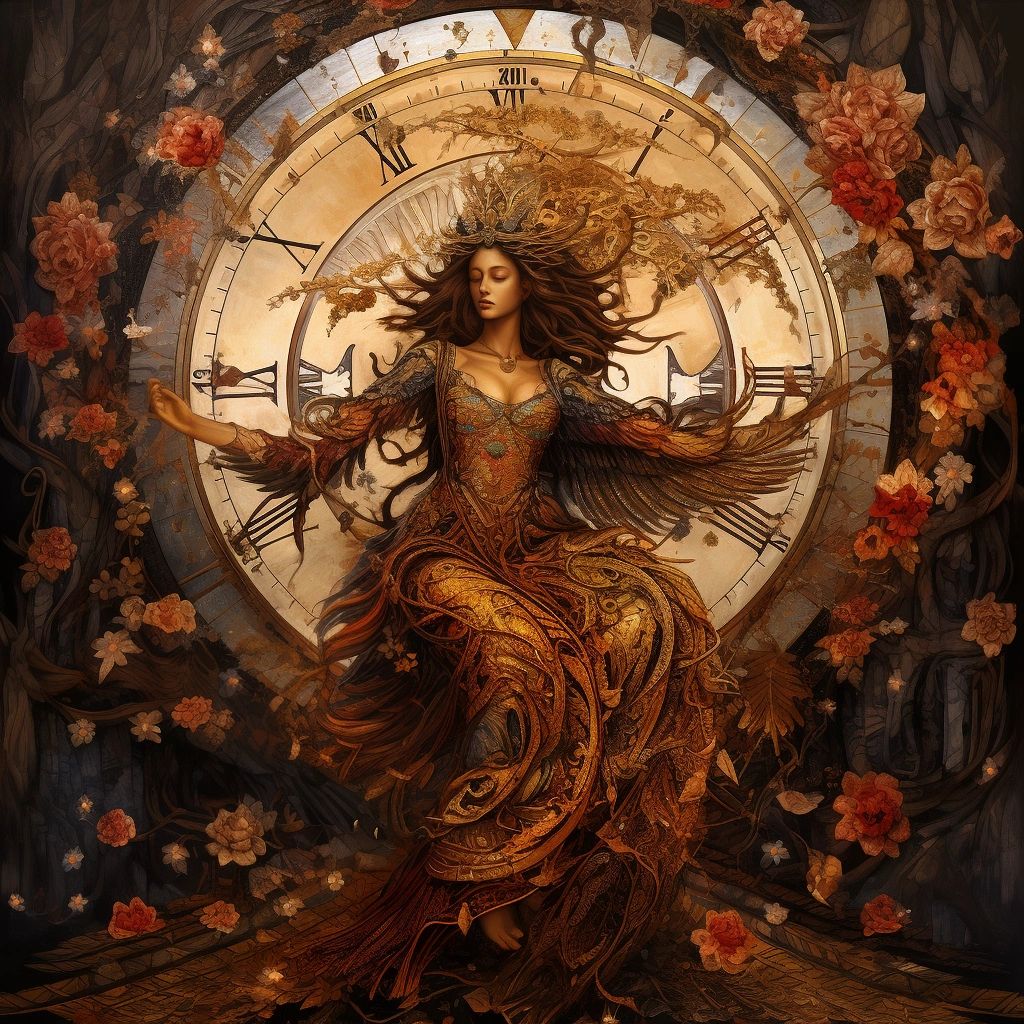
Ornate painting of Sophia as a woman in golden robes falling against a great clock face surrounded by roses

The Fall of Sophia: When Wisdom Made a Mistake

Before there was a world, there was a mistake. It was a divine one, made by Wisdom herself. The ancient Gnostics told a story that explains why the world contains both beauty and suffering, why we feel homesick for a place we’ve never been, and why the path to awakening is also the path of return. It’s the story of Sophia. And it might be your story too. The Fullness Before the Fall In the beginning, according to Gnostic teaching, there was the ineffable One. Beyond description, beyond conception, beyond any name we could give. ...

January 31, 2026 · 7 min · Jeremy Matthews
Cover art for The Restoration: rippling concentric circles radiating from a point of golden light on a deep blue gradient

The Restoration: How Sophia Returns to the Fullness

This is the third and final post in a series on Sophia. The first covered The Fall of Sophia, and the second explored The Thirteen Repentances. The story has moved from tragedy toward hope. Sophia fell through her solitary act of creation. She suffered in the chaos below, her light stolen, her dignity mocked. She offered thirteen repentances, turning persistently toward the light despite her darkness. Now comes the resolution: Sophia’s restoration to the Pleroma, the divine Fullness from which she fell. This ancient mythology holds a promise. ...

January 31, 2026 · 7 min · Jeremy Matthews
Cover art for The Thirteen Repentances: rippling concentric circles radiating from a point of golden light on a deep blue gradient

The Thirteen Repentances: A Template for Spiritual Recovery

This is the second post in a three-part series on Sophia. The first post covered The Fall of Sophia. After the fall, there was darkness. Sophia, divine Wisdom, had made her error. Her unilateral attempt to create had produced the Demiurge, the ignorant craftsman who fashioned our flawed world. Now Sophia herself was trapped in the chaos below, her light-power stolen, surrounded by hostile forces that mocked her suffering. This is where many stories would end. The fall leads to destruction. Mistakes are fatal. ...

January 31, 2026 · 8 min · Jeremy Matthews
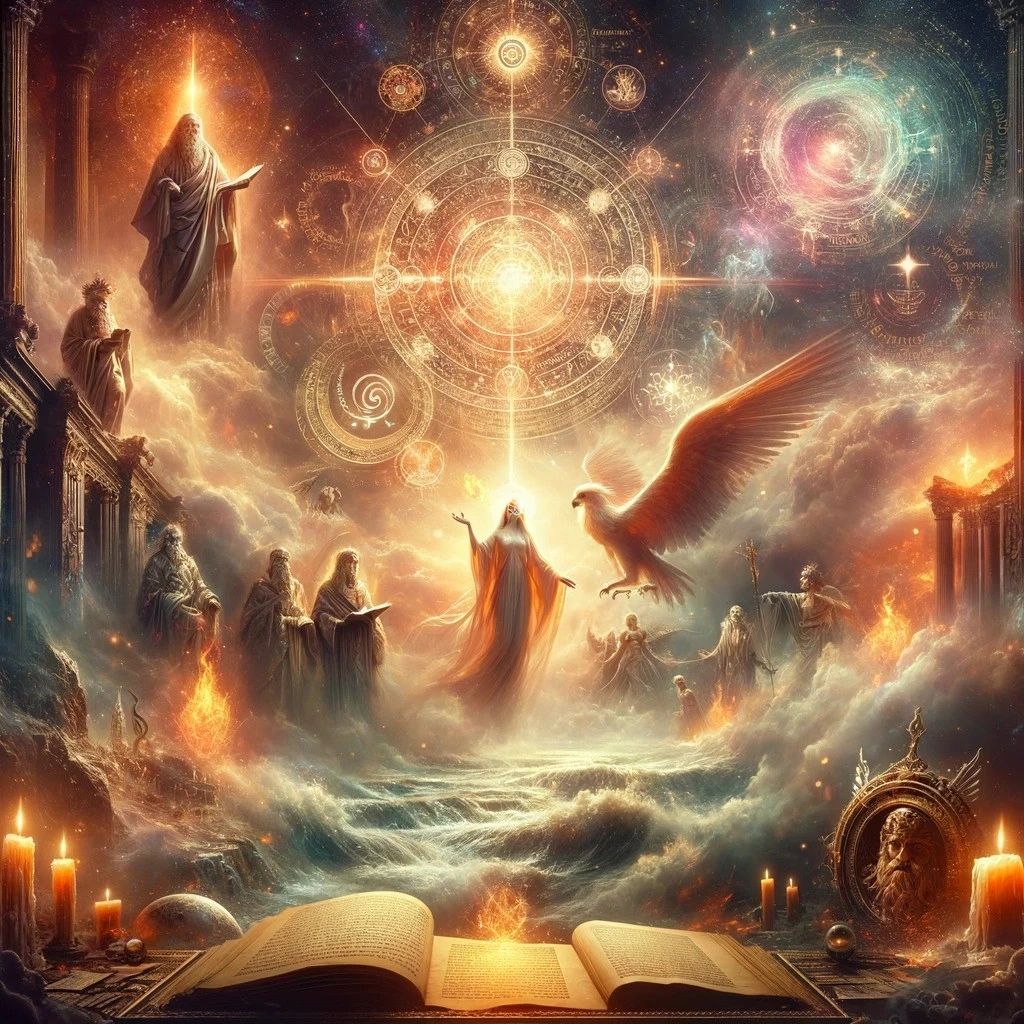
Golden-toned mystical painting of robed figures and a phoenix beneath glowing sacred geometry and a galaxy

Thunder, Perfect Mind: The Voice That Shatters Categories

In 1945, farmers digging near the Egyptian town of Nag Hammadi unearthed a sealed earthenware jar containing ancient manuscripts. Among them was one of the strangest and most powerful texts in all of religious literature. It’s called Thunder, Perfect Mind. A voice speaks. She does not give her name. But she speaks in the first person, with authority, claiming identities that cannot coexist. She demands attention. She defies understanding. She shatters every category we use to organize reality. ...

January 31, 2026 · 7 min · Jeremy Matthews
A lone figure stands at a lake shore beneath a luminous ringed orb of light parting storm clouds over mountains

What is Gnosticism?

Gnosticism is a multifaceted religious and philosophical movement from the early Christian era, with possible roots extending into pre-Christian times. It centers on gnosis, or spiritual knowledge, as the pathway to salvation through direct divine experience rather than faith alone or institutional doctrine. General Beliefs of Gnosticism The core conviction underlying Gnostic thought is that spiritual knowledge (gnosis) is the key to salvation, ahead of faith alone or adherence to dogma. Gnostics embrace a dualistic worldview: the spiritual realm represents pure goodness, while the material world is flawed or corrupt. This framework posits a true, transcendent God against a lesser deity called the demiurge, who is responsible for creating the physical universe and sometimes identified with the Old Testament God. ...

February 7, 2024 · 2 min · Jeremy Matthews