Cover art for Valentinus the Poet: rippling concentric circles radiating from a point of golden light on a deep blue gradient

Valentinus: The Gnostic Who Almost Became Bishop of Rome

Picture the church in Rome around the year 140. There’s no cathedral and no Vatican, just a scatter of house congregations that speak Greek, argue constantly, and look to a handful of gifted teachers. One of the most gifted is a man from Egypt named Valentinus, and by one ancient account he expects to be made bishop. He wasn’t. Someone else got the job, and within a generation Valentinus had become a favorite target of the heresy hunters. Bentley Layton, whose translation of the fragments I’ll lean on throughout, says that if things had gone the other way, “the whole future of Roman Christianity might have been unimaginably altered.” ...


October 11, 2026 · 8 min · Jeremy Matthews
Cover art for The Five Valentinian Sacraments: rippling concentric circles radiating from a point of golden light on a deep blue gradient

The Five Valentinian Sacraments

The Gospel of Philip compresses an entire liturgical world into a single sentence. “The master did everything in a mystery,” it says, “a baptism and a chrism and a eucharist and a redemption and a bridal chamber.” Five rites, in a fixed order, presented as the complete curriculum of transformation. The Valentinian school, the most sophisticated branch of Gnostic Christianity, appears to have practiced some version of this fivefold sequence, and Philip is our best window into what the rites meant to the people inside them. The site’s introduction to the mysteries covered why such things came in graded ladders. This post climbs this particular ladder one rung at a time. ...

September 5, 2026 · 5 min · Jeremy Matthews
Cover art for Understanding the Pleroma: rippling concentric circles radiating from a point of golden light on a deep blue gradient

The Pleroma: Understanding the Fullness

Everyone is fluent in deficiency. Not enough time, not enough money, not enough sleep, not quite enough of whatever the morning’s first anxious thought is auditing. The vocabulary of lack comes preinstalled. The old Gnostics had a word for the opposite, and they made a remarkable claim about it. Pleroma is Greek for fullness, and in their map of reality the fullness comes first. Lack is real, but it is a latecomer with a traceable history, and knowing the map is part of the cure. This is a beginner’s guide to the most beautiful idea in Gnostic cosmology. ...

August 15, 2026 · 5 min · Jeremy Matthews
Cover art for The Gospel of Truth: rippling concentric circles radiating from a point of golden light on a deep blue gradient

A Walk Through the Gospel of Truth

Somewhere in the middle of the second century, a Christian teacher composed a sermon that begins with the word joy. Not judgment, not sin, not the end of the world. “The gospel of truth is joy,” the first line announces, “for people who have received grace from the Father of truth.” The church that won history’s argument burned what it could of texts like this one, and for most of two millennia we knew it only from a complaint. Irenaeus, cataloging heresies around the year 180, grumbled that the Valentinians had produced something called the Gospel of Truth that bore no resemblance to the real gospels. He meant it as an insult. As a book review, it turns out to be accurate, because the text that surfaced in the Egyptian codex later named for Carl Jung resembles nothing else in early Christian literature. It rewards a slow walk. ...

August 13, 2026 · 5 min · Jeremy Matthews
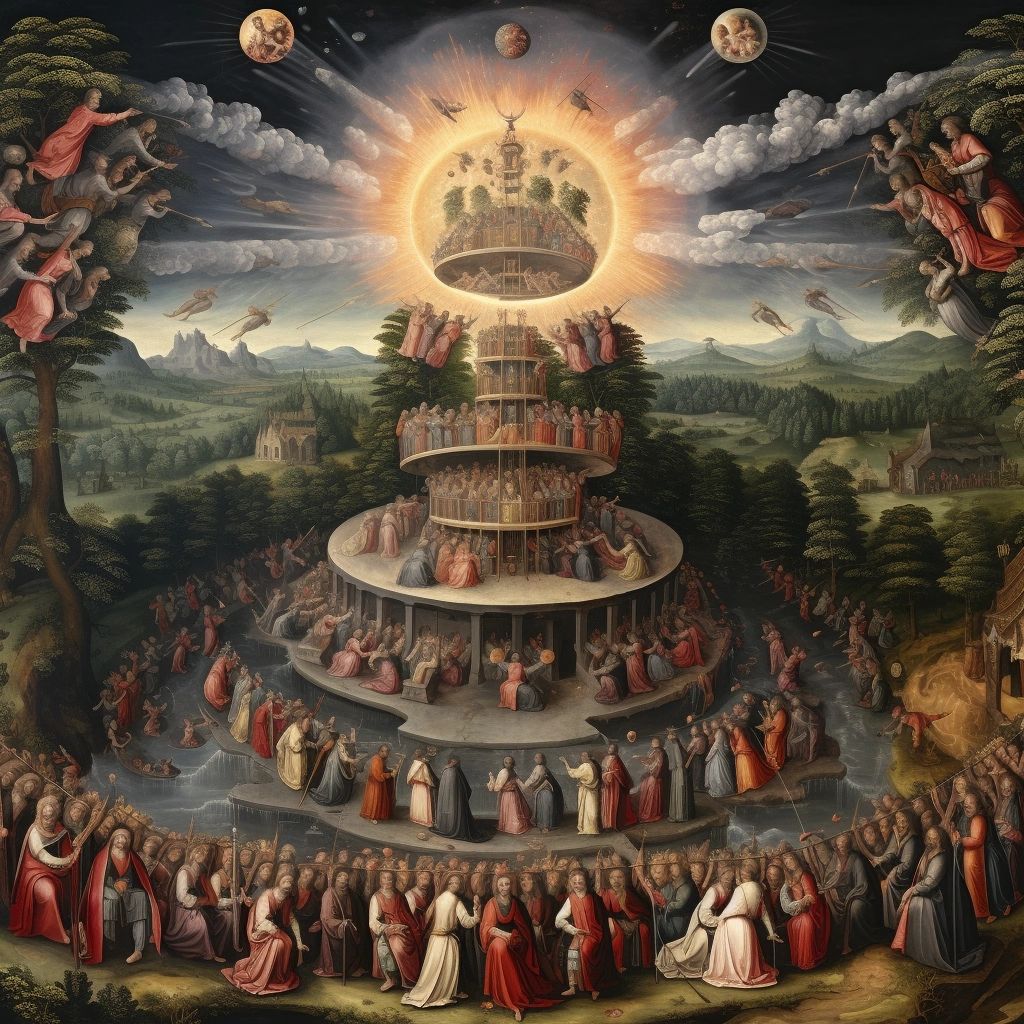
Renaissance-style painting of robed figures gathered in circles around a tiered tower beneath a radiant celestial sphere

Who were the Gnostics?

Gnosticism, particularly its early Christian form, represents a complex and fascinating aspect of early Christian history. It was characterized by distinctive beliefs, practices, and eventual suppression. Emerging in the first and second centuries AD, Christian Gnosticism was not a uniform movement but rather a constellation of diverse groups who shared certain esoteric and mystical beliefs. Origins The origins of Christian Gnosticism remain mysterious, likely drawing from Jewish, Christian, and Hellenistic pagan traditions. The movement developed as early followers of Jesus sought to understand his teachings and divine nature. ...

February 6, 2024 · 2 min · Jeremy Matthews